Pumpkin 'Casperita'
Hybrid F1
Cucurbita pepo
The most adorable mini white pumpkin with small 1/2 to 1-pound pumpkins. Also edible. Vine length: Semibush.
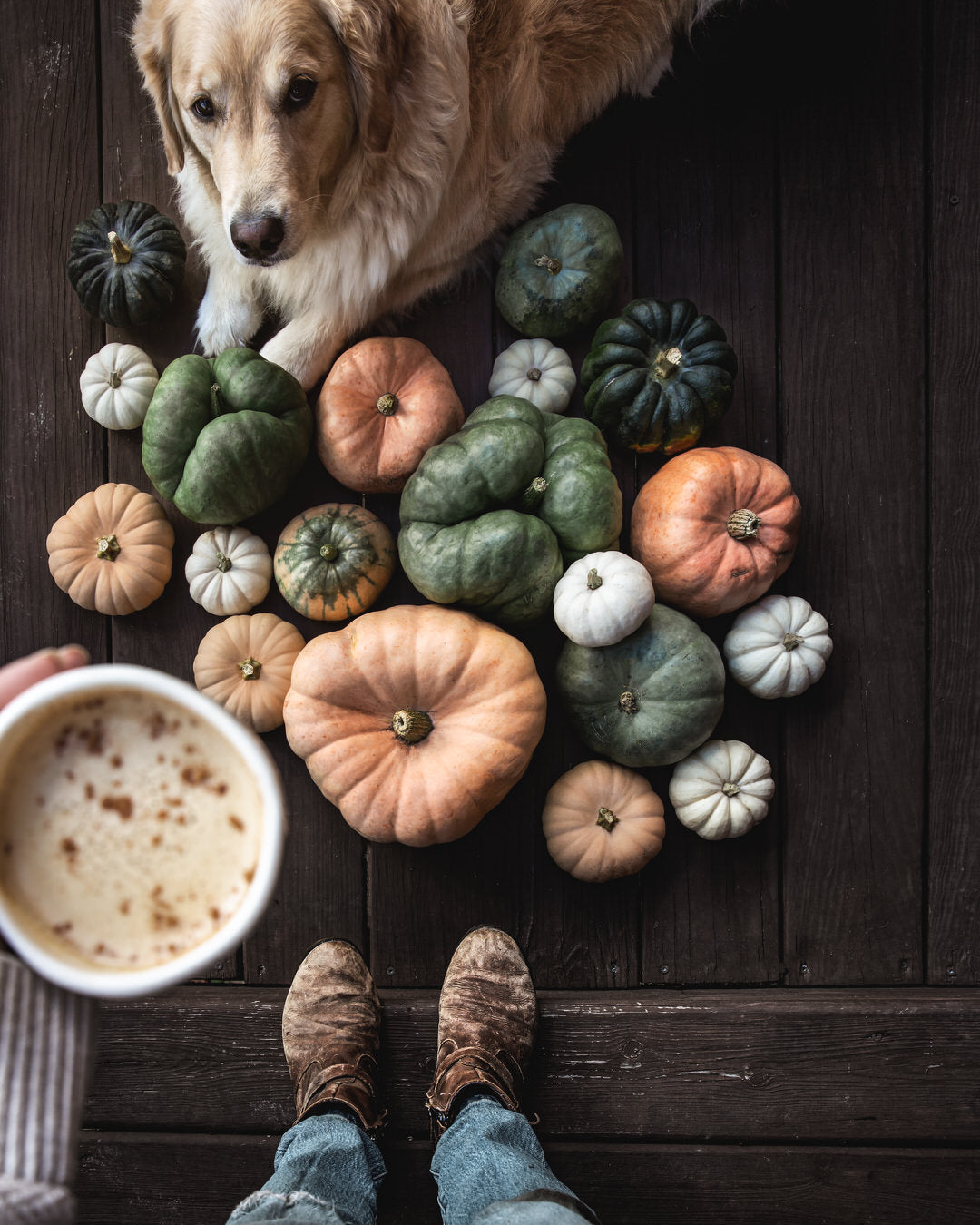
I’ve become a bit obsessed with ornamental pumpkins. With so many unique shapes and colors, it’s hard not to want to try them all. And I mean, they're also edible and store well, so we're basically being very practical here.
Disease Resistance:
- Powdery Mildew (Intermediate)
- Watermelon Mosaic Virus (Intermediate)
Packet contains approximately 10 seeds.
DETAILS
Plant type: Annual
Days to maturity: 77 days
Light preference: Full sun
Plant spacing: See below
Hybrid status: Hybrid
SOWING
Depth: 1/2–1 inch
Germination: 75–95°F
How to Grow
Sow indoors 3 weeks before transplanting out after danger of frost. Roots do not like disturbance, so we prefer to direct sow. Direct sow in late spring when soil is at least 70°F and danger of frost has passed. Sow 2 seeds at the appropriate spacing for the variety's vine length, 1/2- to 1-inch deep. Thin to one plant.
Spacing: To keep things simple, we space 36” apart in rows 6’ apart (as close as 24" on a trellis), but here are more-precise recommendations. Between-row spacing: bush plants, 4-5’; short vines, 6’; long-vines, 12’. In-row spacing: small, 18–24”; medium, 24–36”; large to XL, 36–72”.
Harvest & Storage
Pumpkins can tolerate a couple light frosts, but temperatures below 28°F can damage fruit. Harvest when fruit color is fully developed. Sun cure in the field for about a week or cure indoors by keeping fruits at 80–85°F with good air ventilation. Black pumpkins and white pumpkins are both sensitive to sun scald and should be brought out of direct sunlight once foliage starts to die back. Store at 50–60°F with 50–70% relative humidity and good ventilation.
Hybrid Seeds (Never GMO)
Please note that hybrid varieties are produced by traditional breeding methods of two distinct OP (open-pollinated) varieties within the same species. This is done for improved qualities, but saved seeds will not produce true to seed. While I tend to prefer most OP varieties, there are some exceptions in which a hybrid is a real winner (like my favorite cherry tomato, Sungold).
It's important to note that this is entirely different from genetic modification. Genetically Modified Organisms (GMOs) have DNA (sometimes from non-plant organisms) inserted into their genome via genetic engineering techniques.
We do not sell GMO seeds.
From Johnny's: F1 Hybrid seeds are the result of a cross between two genetically distinct parent plant lines. The plants grown from these seeds will usually show more vigor than either of the two parent plants, and often more vigor and uniformity than similar non-hybrid (standard) varieties. To create a hybrid (F1), traditional breeding methods are used that involve the cross-pollination of two parent varieties that were selected for specific traits.
SHIPPING
FREE: $100 or more on any seeds
$3.95: 1–9 seed packets
$7.95: 10+ seed packets