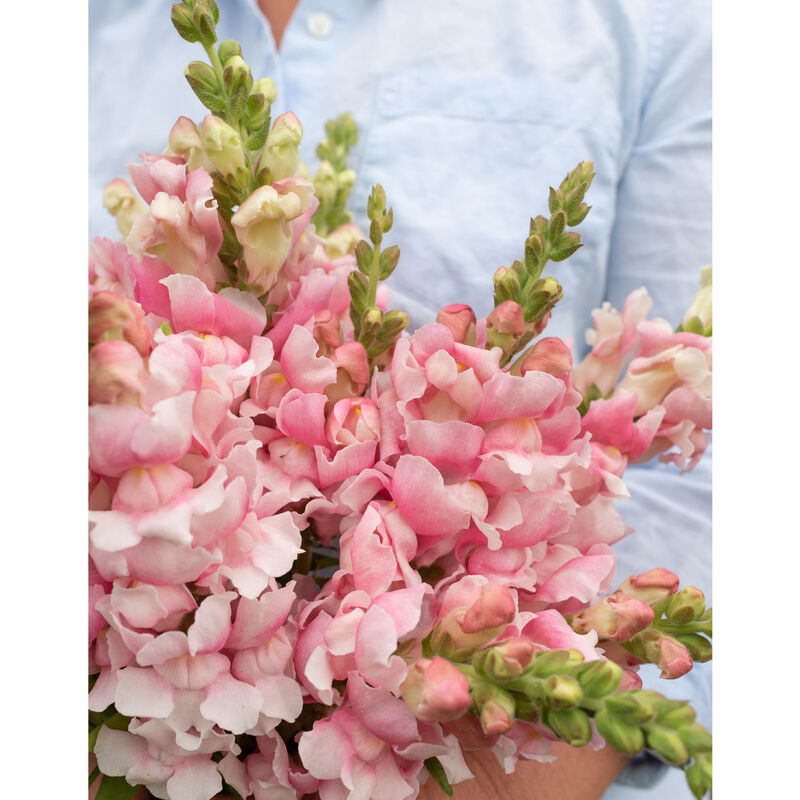
Snapdragon 'Bridal Pink'
F1 Hybrid
Antirrhinum majus
Folks on Insta asked if I would get these seeds: Ask and you shall receive!
Snapdragons are one of the best blooms for the cut flower growers. They are easy to grow, offer an extended season when you plant different groups, have a long vase life, fill out a bouquet beautifully, and customers adore them.
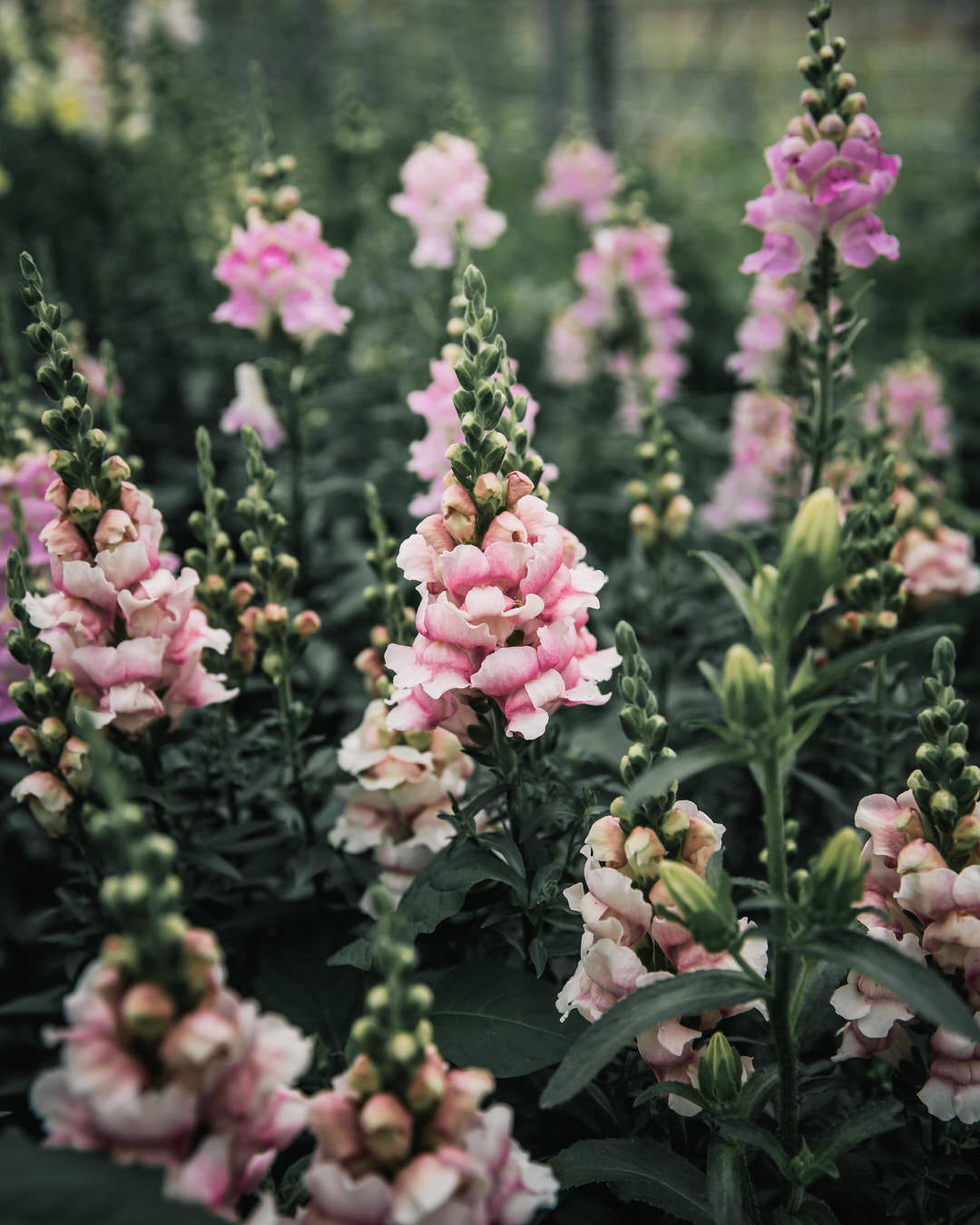
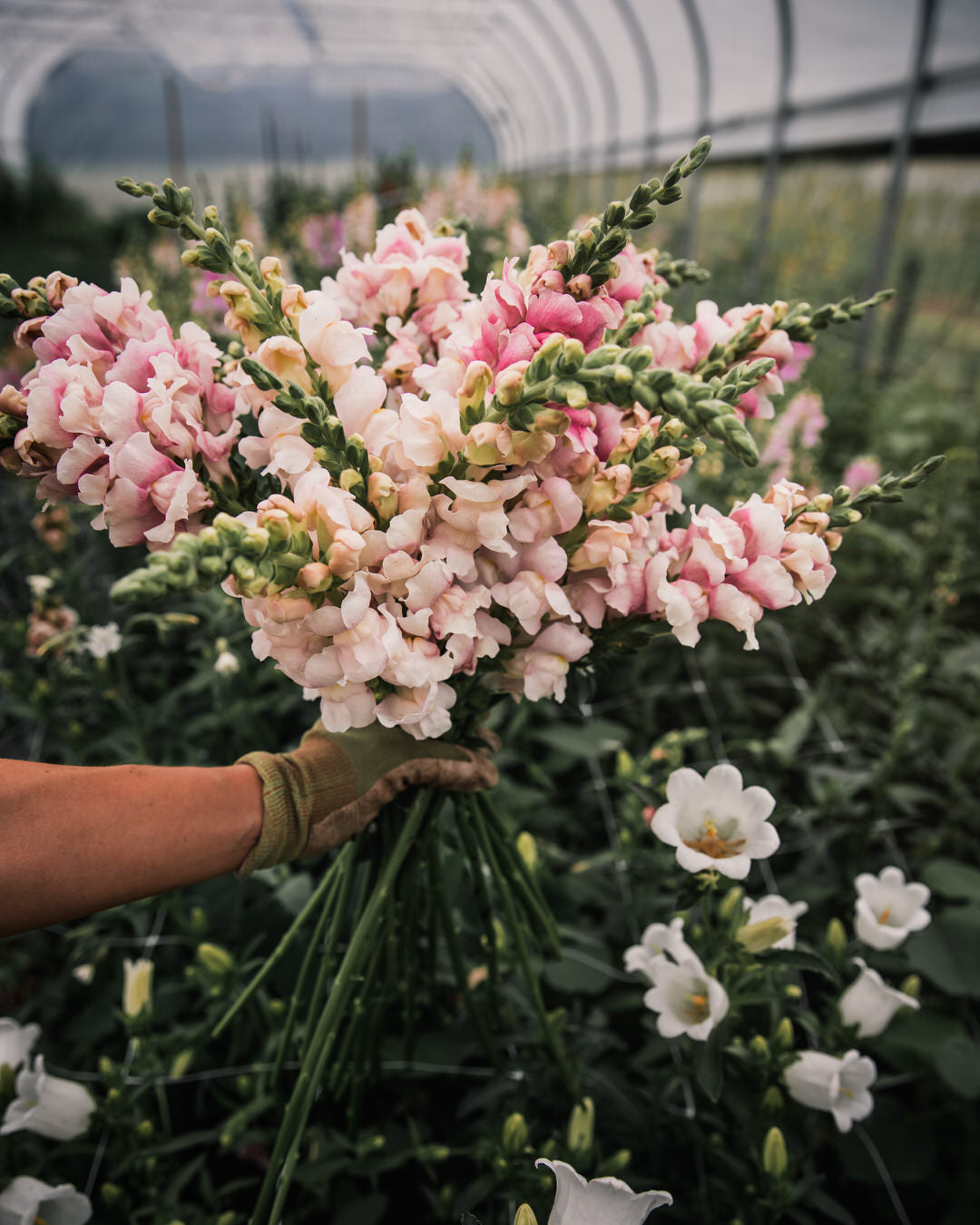
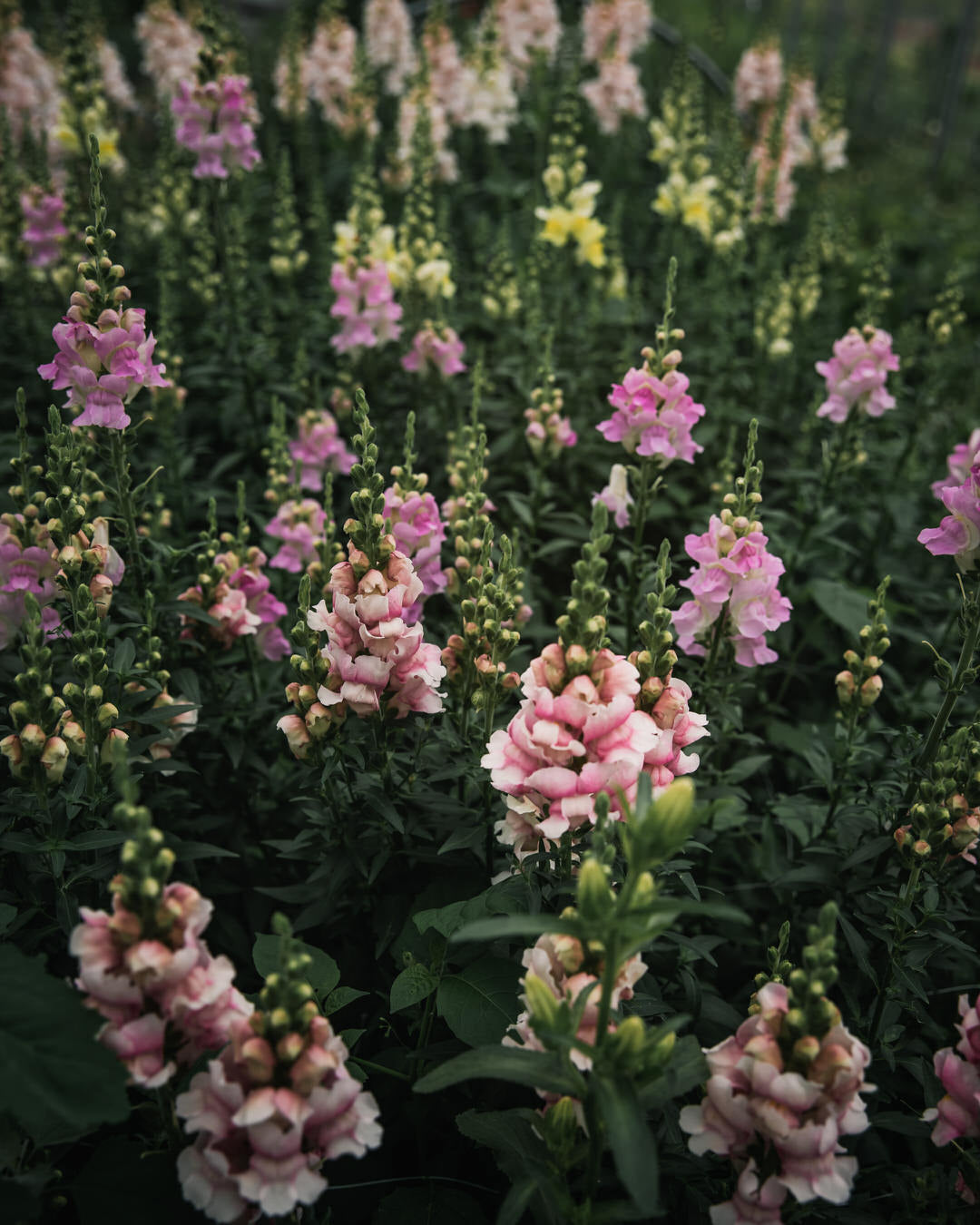
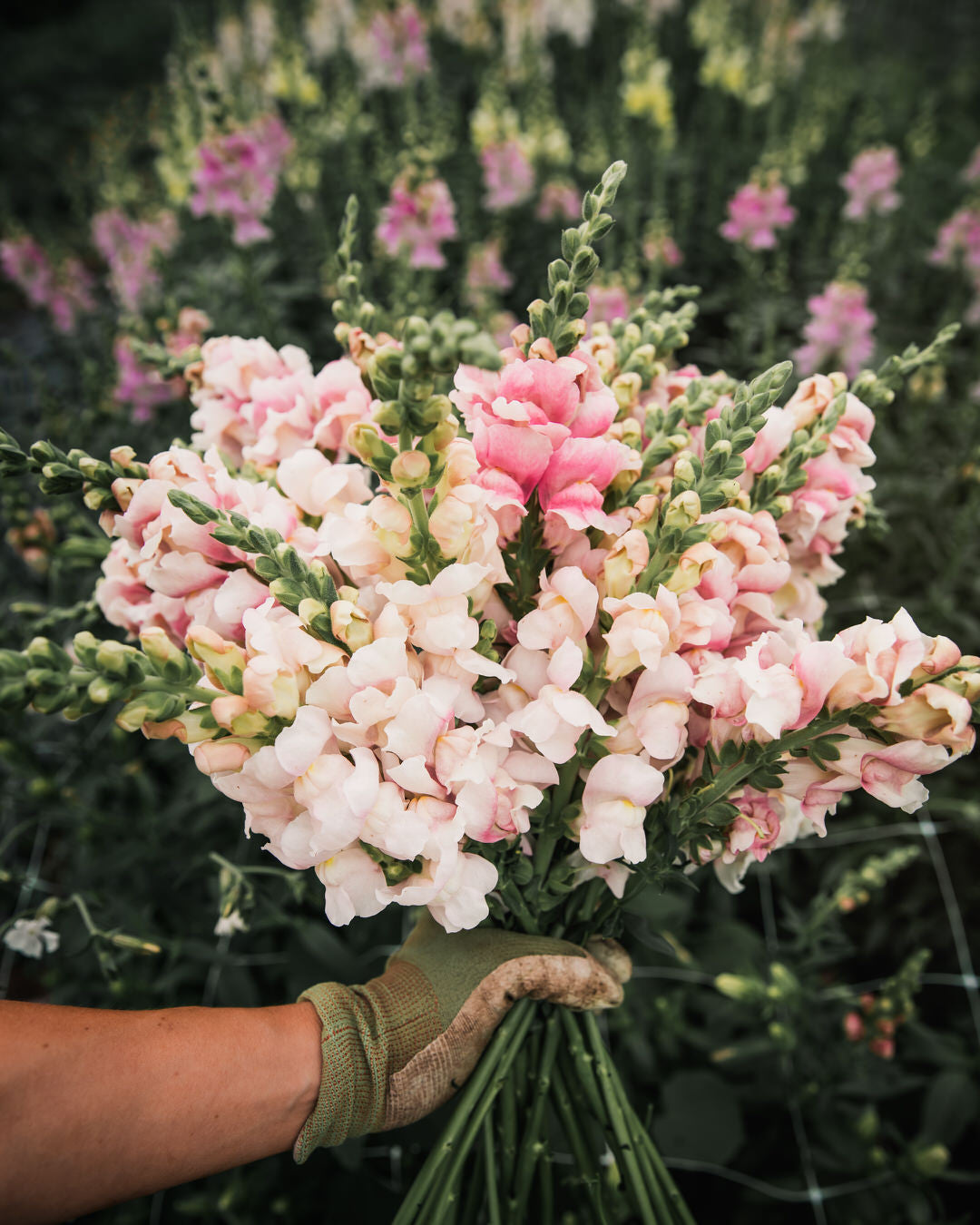
About this variety: A stunning snapdragon in a soft ombré that shifts from rose into the palest blush, adding beautiful depth and movement to arrangements. Considered a Group 2 snapdragon, yet it performs well throughout spring here (where it can get hot quickly). The ones I'm holding are a mixture of Bridal Pink and Avignon Silver.
Whether swaying in the breeze or standing tall in a vase, this cottage garden mainstay—with its subtle bubblegum scent—exudes whimsy and charm. A beloved cut flower, its story spans centuries, intertwining ancient mythology, botanical exploration, and timeless garden aesthetics.
Snapdragons are known for their unique shape, which resembles a dragon’s mouth that can “snap” open and shut when squeezed, hence the name. Perhaps you remember this from childhood.
In folklore, snapdragons were believed to have protective qualities. It was believed that placing them in homes would protect against evil spirits, negativity, and deceit. In the Victorian language of flowers, snapdragons symbolized strength, grace, and creativity (as well as indiscretion and deception, depending on the color).
There blooms are edible too, though slightly bitter, so use sparingly.
Packet contains approximately 50 seeds.
DETAILS
Plant type: Annual
Days to maturity: 100–110 days
Light preference: Full sun
Plant spacing: 6–9 inches
Plant height: 24–30 inches
SOWING
Depth: Surface sow (light aides germination)
Days to germination: 7–14 days at 70–75°F
How to Grow
Sow indoors 8–10 weeks before transplanting out. Surface sow as light aides germination, but a fine dusting of vermiculite helps with moisture. Bottom water or mist. Plants may be pinched, and its often recommended for more flowers, but it is not necessary. On our farm, we do not pinch. Instead, we plant intensively at 6” spacing, 3 plants per hole. and find we have better-quality stems than when pinching.
Harvest & Vase Life
For long-term storage, harvest when 2 to 3 lower buds are expanding or showing color. Otherwise, harvest when flowers are 1/3 to 1/2 open on a stem. Based on NCSU trials, stems harvested with just lower buds expanding had longer vase life than stems harvested with open flowers, but stems were not as showy. Expected vase life: 7–10 days.
Hybrid Seeds (Never GMO)
Please note that hybrid varieties are produced by traditional breeding methods of two distinct OP (open-pollinated) varieties within the same species. This is done for improved qualities, but saved seeds will not produce true to seed. While I tend to prefer most OP varieties, there are some exceptions in which a hybrid is a real winner (like my favorite cherry tomato, Sungold).
It's important to note that this is entirely different from genetic modification. Genetically Modified Organisms (GMOs) have DNA (sometimes from non-plant organisms) inserted into their genome via genetic engineering techniques.
We do not sell GMO seeds.
From Johnny's: F1 Hybrid seeds are the result of a cross between two genetically distinct parent plant lines. The plants grown from these seeds will usually show more vigor than either of the two parent plants, and often more vigor and uniformity than similar non-hybrid (standard) varieties. To create a hybrid (F1), traditional breeding methods are used that involve the cross-pollination of two parent varieties that were selected for specific traits.